


What to Look for When Comparing Property Listings in French Cities vs. Rural Areas
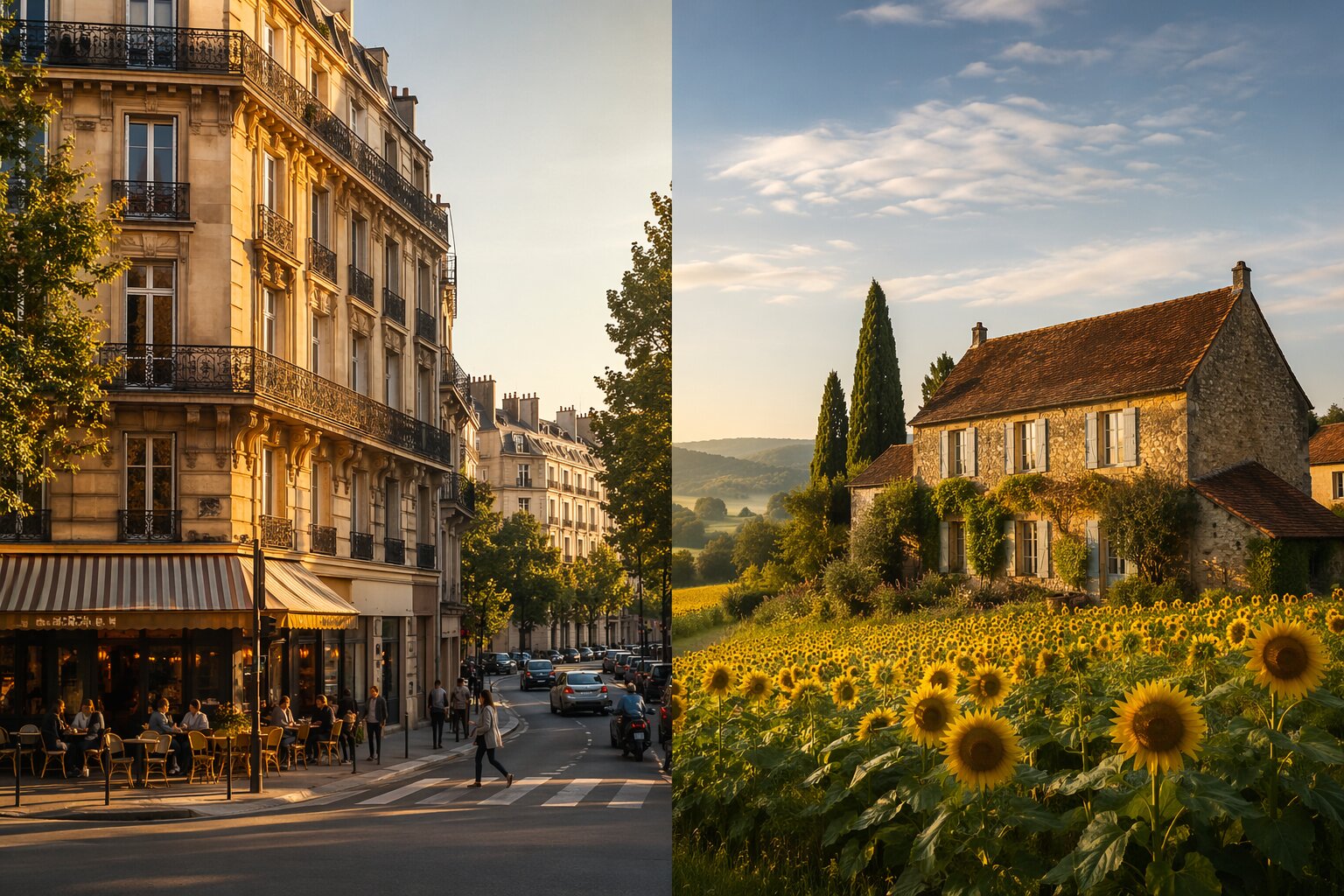
When you compare a Paris apartment to a farmhouse in the Dordogne, you’re not just weighing square meters. You’re trading space for access, calm for convenience, and price for long‑term potential. You’ll need to look beyond the listing photos: think structure, flood maps, transport, energy ratings, taxes, and resale prospects.
Miss a few of these, and that “bargain” could quickly turn into something else entirely.
Decide: City Apartment or Country House in France?
How do you choose between properties for sale in France, such as a compact city apartment and a spacious country house, when both offer different advantages? A useful first step is to compare concrete costs and constraints. For example, a resale apartment in Paris can average around €9,520/m², whereas the national average for older houses is closer to €2,930/m².
In cities, you typically pay more per square metre and accept less living space in exchange for proximity to services, employment, and public transport.
In rural areas, you usually gain interior space and land for a lower price per square metre, but other factors require close examination.
It's important to assess structural condition (including foundations and roof), potential flood risk near rivers or streams, and subsidence issues in regions prone to drought and soil movement.
Energy performance is also a key consideration, as older properties can require significant upgrades to meet current efficiency standards.
Properties that appear inexpensive at first may involve substantial renovation and compliance costs if structural defects, poor insulation, or outdated systems are overlooked.
Location: Commute and Amenities in French Cities vs the Countryside
When comparing listings in French cities and in the countryside, the main difference isn't only the price per square metre but the practical conditions of daily life.
In urban areas, properties located closer to the centre usually cost more, so it's important to verify that the higher price actually reduces commuting time and provides convenient, walkable access to shops, schools, medical services, and cafés.
In rural France, larger plots and open views can be attractive, but they often come with greater reliance on a car.
It's useful to calculate realistic travel times to supermarkets, banks, doctors, and other essential services, and to check the frequency, reliability, and timetables of any available public transport.
A practical approach is to assess how many of your regular needs you can meet without making long or frequent car journeys, and to factor those transport requirements into your overall housing decision.
France Property Costs: City vs Rural Prices, Taxes, and Bills
Although buyers often begin with location and lifestyle, the concrete figures for purchase prices, taxes, and ongoing costs in France can significantly influence the choice between city and countryside.
In major urban areas, the primary cost difference is usually the purchase price. For example, older apartments in Paris average around €9,520/m², and in the wider Île‑de‑France region about €6,150/m², compared with roughly €2,930/m² nationally for older homes.
Local taxes and regular bills also vary. In Paris, property tax averages about €64 per month, whereas in Nîmes it's closer to €140 per month, which can be equivalent to roughly two additional mortgage payments per year.
Lower purchase prices in rural areas can be offset by other expenses and risks, such as structural issues (including unstable foundations), flood‑exposed locations, and the cost of extensive renovation work often required in older stone houses.
Key Features: City Flats vs Country Houses
Because headline prices can differ substantially, the main features you compare in French city flats versus country houses extend beyond cost per square metre.
In Paris, older flats averaging around €9,520/m² typically offer less internal space but benefit from central locations, shared amenities (such as lifts, courtyards, or concierge services), and the convenience of communal building management, which is reflected in regular service charges.
In rural areas, older properties closer to €2,930/m² generally provide larger plots, gardens, outbuildings, and greater privacy.
However, the additional space can mask significant renovation or maintenance needs, particularly in older stone houses, where structural work, insulation, and modernisation may be required.
Access is another key factor: city properties are usually located near public transport, shops, schools, and healthcare facilities, while many rural homes assume regular car use and longer travel times to essential services.
Big Risks: Resale, Climate, and Renovation Money Pits
Even if a rural property appears inexpensive compared with city homes, it's important to weigh that apparent discount against three main risks: resale prospects, local environmental conditions, and renovation costs.
In many rural areas, property values grow slowly or remain flat, so selling later at or above your purchase price may be difficult. Investigate recent sales data, time on market for comparable properties, and long-term price trends.
Assess climate and ground conditions carefully. Review flood maps, groundwater levels, soil type, and any visible signs of movement such as cracks that may indicate subsidence or foundation issues. Local planning or environmental authorities can often provide relevant data.
Renovation and running costs should be calculated in detail. Obtain realistic estimates for structural repairs, drainage, septic systems, insulation, heating, and energy-efficiency upgrades. Include professional fees, contingency allowances, and likely maintenance. Base your decision on the total projected cost of ownership rather than the purchase price alone.
Can You Rent It Out? City vs Rural Rental Potential
When comparing city and rural rental listings in France, the key questions are how easily a property can be rented, how frequently, and to what type of tenant. Urban properties, particularly those in or near medium and large towns, generally benefit from more consistent, year-round demand due to employment opportunities, transport links, and access to services.
As a result, they're more likely to maintain steady occupancy at relatively predictable rent levels. Higher purchase prices per square metre in these areas often correspond to higher and more stable rents.
Rural properties typically face more variable demand. Inland areas, especially those without strong transport connections, may experience longer vacancy periods outside of peak holiday seasons and often require tenants to own a car.
In contrast, certain coastal and Mediterranean rural zones tend to perform better for short-term and seasonal rentals, supported by tourism. In all cases, it's important to assess proximity to public transport (including TGV stations), local employment centres, and essential amenities, as these factors significantly influence rental potential and vacancy risk.
Conclusion
When you compare French city apartments and country houses, focus on more than the headline price. Weigh commute times, amenities, and energy costs against space, peace, and car dependence. Check structural condition, climate and flood risks, plus realistic renovation budgets. Finally, think like a future buyer or tenant: will you be able to resell or rent it easily? If the numbers, lifestyle, and risks all line up, you’ve found the right place.